Bunny Har Gao – meaning & use in Chinese cuisine
Easter edition with artisanal precision
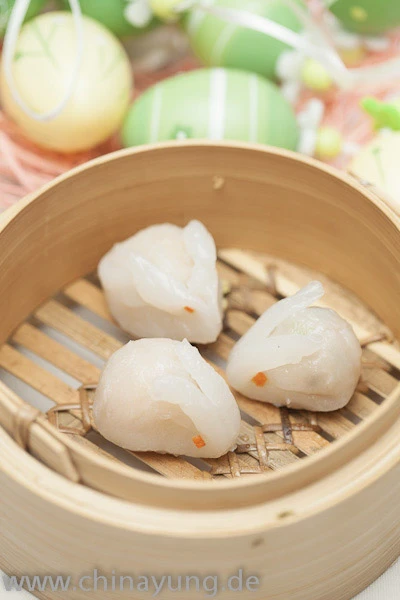
Bunny Har Gao are a seasonal Easter edition of classic Har Gao. The foundation remains unchanged: fine crystal dough, precise folding, and gentle steaming.
The innovation lies in the form. The bunny shape is not decorative gimmickry but an added technical challenge that demands even greater precision.


Har Gao as a technical foundation
Har Gao are regarded as the supreme discipline of dim sum. The crystal dough must be thin, elastic, and translucent after steaming, without becoming sticky.
These standards fully apply to the Easter edition.
Shaping beyond decoration
The bunny shape is created entirely by hand. Ears, curves, and folds must be formed so the dough cooks evenly.
Any imbalance would compromise texture or sealing.
Texture and bite
Despite the playful appearance, the bite remains classic: tender, lightly elastic, and clean on the palate.
Form must never come at the expense of mouthfeel.
The filling remains central
The filling follows the classic Har Gao profile: clean, juicy, and precisely seasoned.
It supports the dough rather than overpowering it.
Steaming as the decisive step
Gentle, even steaming preserves shape, translucency, and juiciness.
Delicate details such as the ears require exact timing.
Easter within a dim sum context
Bunny Har Gao are intentionally seasonal. They connect the Easter theme with Cantonese dim-sum craftsmanship.
They work especially well as a light, joyful accent within a menu.
Why seasonal shapes make sense
Seasonal forms create attention without altering the core product.
The technique remains constant; only the visual narrative changes.
Who these Har Gao are for
This edition appeals to guests who appreciate craftsmanship and seasonal creativity.
They are particularly popular with families and festive occasions.
Conclusion
Bunny Har Gao demonstrate that precision and lightness can coexist with playful design. An Easter edition that respects technique while conveying joy.